Digital wallet integration for Graitor
Project Overview
Graitor was a Danish startup focused on encouraging sustainable behavior through a digital rewards platform. While Denmark has a well-established bottle deposit system, many recyclable items still end up in inappropriate waste streams because users lack incentives, guidance, or simple reward mechanisms for responsible disposal.
The goal of this project was to evolve the existing Graitor 1.0 platform into a more scalable and engaging product experience for Graitor 2.0. My role focused on designing and validating a digital wallet feature that would simplify how users collect, manage, and redeem rewards for green actions. Although Graitor later closed due to political and market-related factors, the project successfully demonstrated how a digital wallet could strengthen engagement within sustainability-focused platforms.
My role
End-to-end product design from concept exploration to interactive prototype and usability testing. I analyzed the market, run interviews, explored multiple approaches to the wallet flow, created wireframes and interactive prototypes, validated concepts through user testing, and refined the solution into a scalable experience aligned with both user needs and business objectives.
Methodology
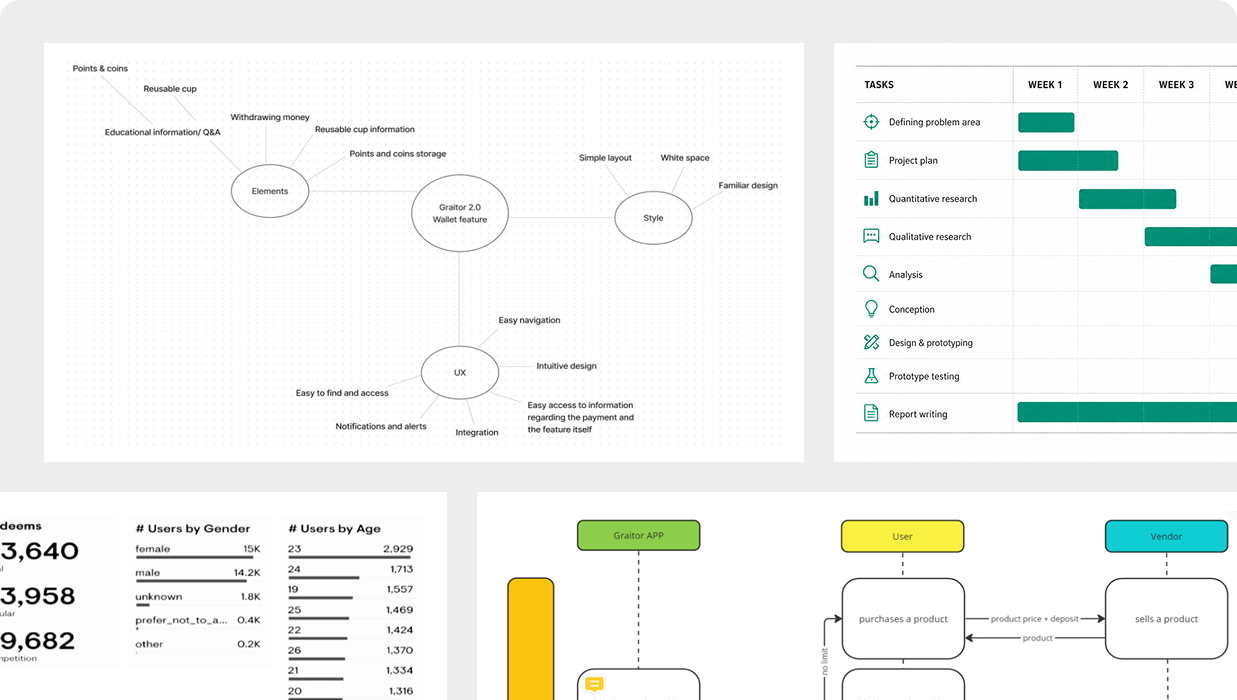
Research & analysis
I conducted a combination of brand, market, audience, and user research to understand Graitor’s ecosystem, identify key challenges, and define opportunities for improvement. The research included an analysis of the existing product experience, competitor landscape, user behaviors, and stakeholder perspectives through surveys and interviews.
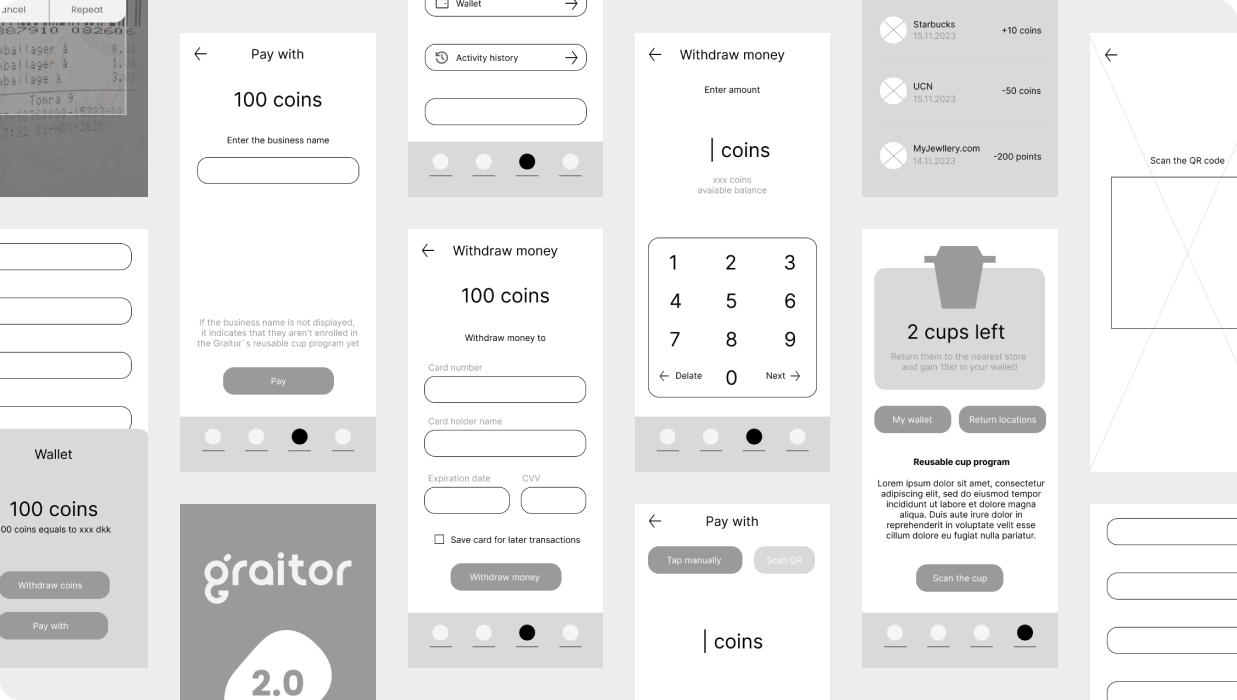
Concept development
Building on the research insights, I translated user needs, business goals, and stakeholder expectations into a clear product concept for Graitor 2.0. It focused on creating a simple and intuitive way for users to manage reusable cups, track rewards, and understand their impact, while also supporting vendors in adopting a more sustainable waste management process. User journeys and product flows were developed to map key interactions across the ecosystem, identifying opportunities to improve clarity, engagement, and usability.
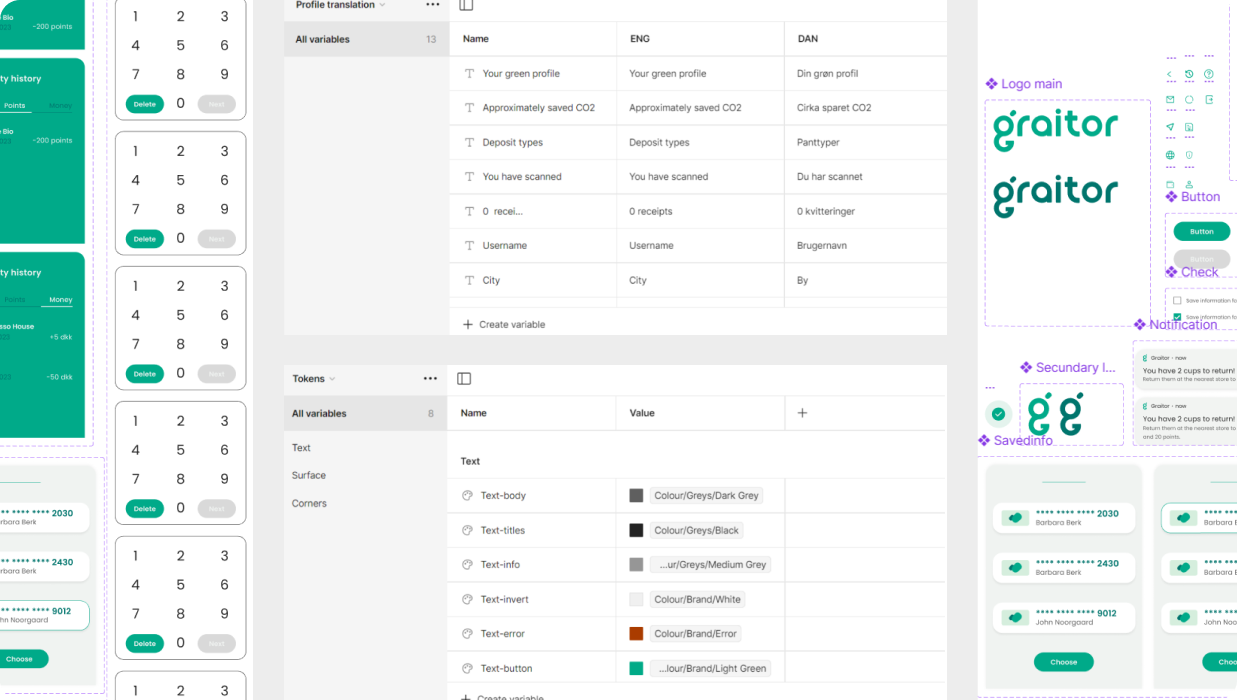
Design process
I transformed the wireframes into a scalable high-fidelity interface by building a structured design system in Figma. I created local variables for colors, typography, border radius, and multilingual content, enabling efficient updates and dynamic prototypes. To maintain consistency, I developed reusable components and applied auto layout to create flexible interface elements that adapted to changing content. The final interactive prototype allowed to run feedback sessions with the Graitor team as well as final user testing.
.png)
Final outcome
The final deliverables included user flows, wireframes, high-fidelity UI designs, an interactive prototype, and a feature requirements document for development. The wallet feature was successfully implemented and released as part of Graitor 2.0, validating the design through a real-world product launch.
Shortly after the release, however, the Danish government introduced a nationwide solution addressing the same market need. As a result, Graitor was no longer able to compete in the space and the company ultimately ceased operations.
.png)
.png)